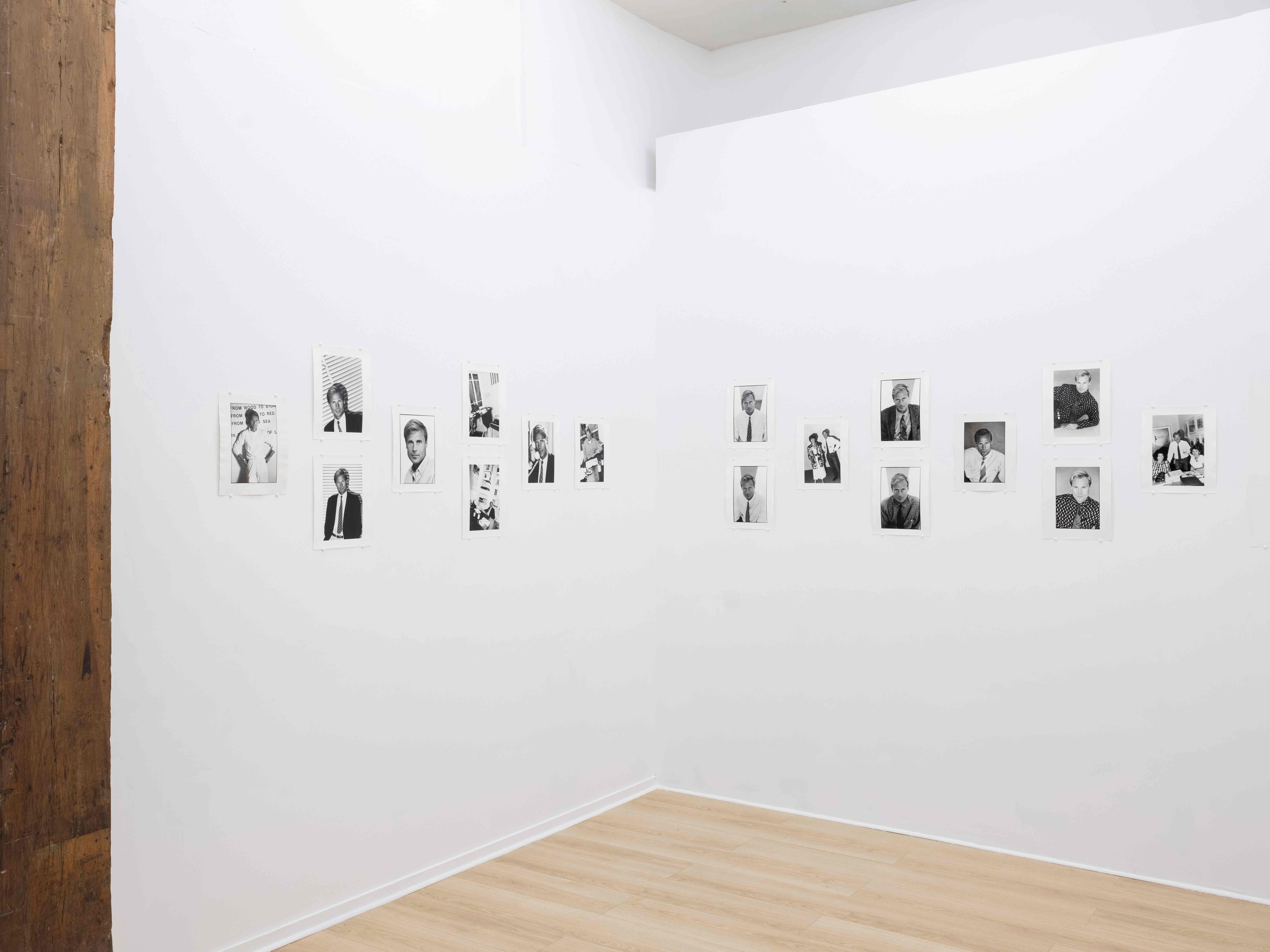

We are in the home of Ghislain Mollet-Viéville, who described himself as an agent d’art. His Paris apartment functioned as a lived showroom, a gallery one inhabited rather than simply visited. Exhibitions, discussions, and debates took place there by appointment, leading Mollet-Viéville to realize early on, as he has often said, that thinking about art and its networks could be as important as the artworks themselves.
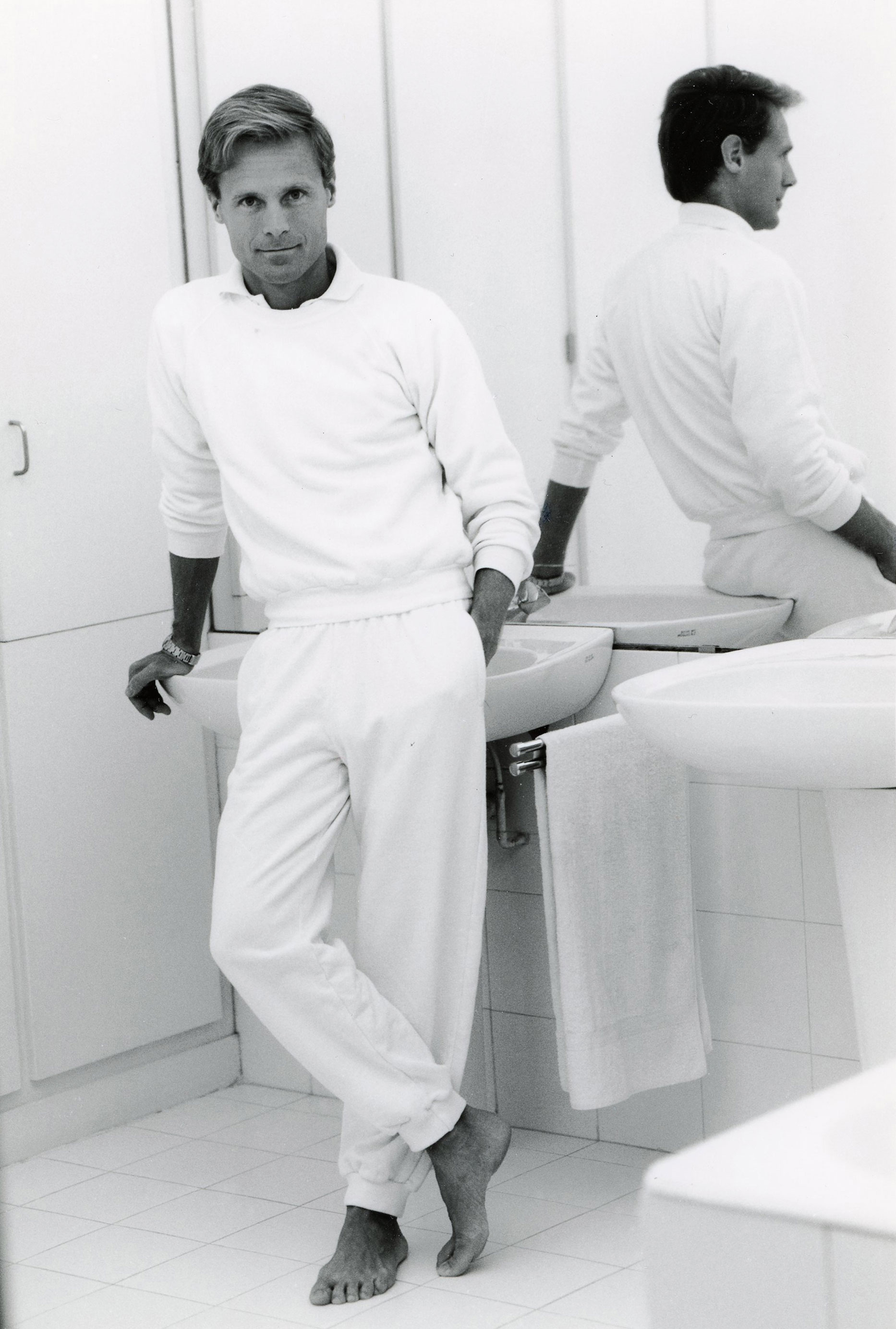
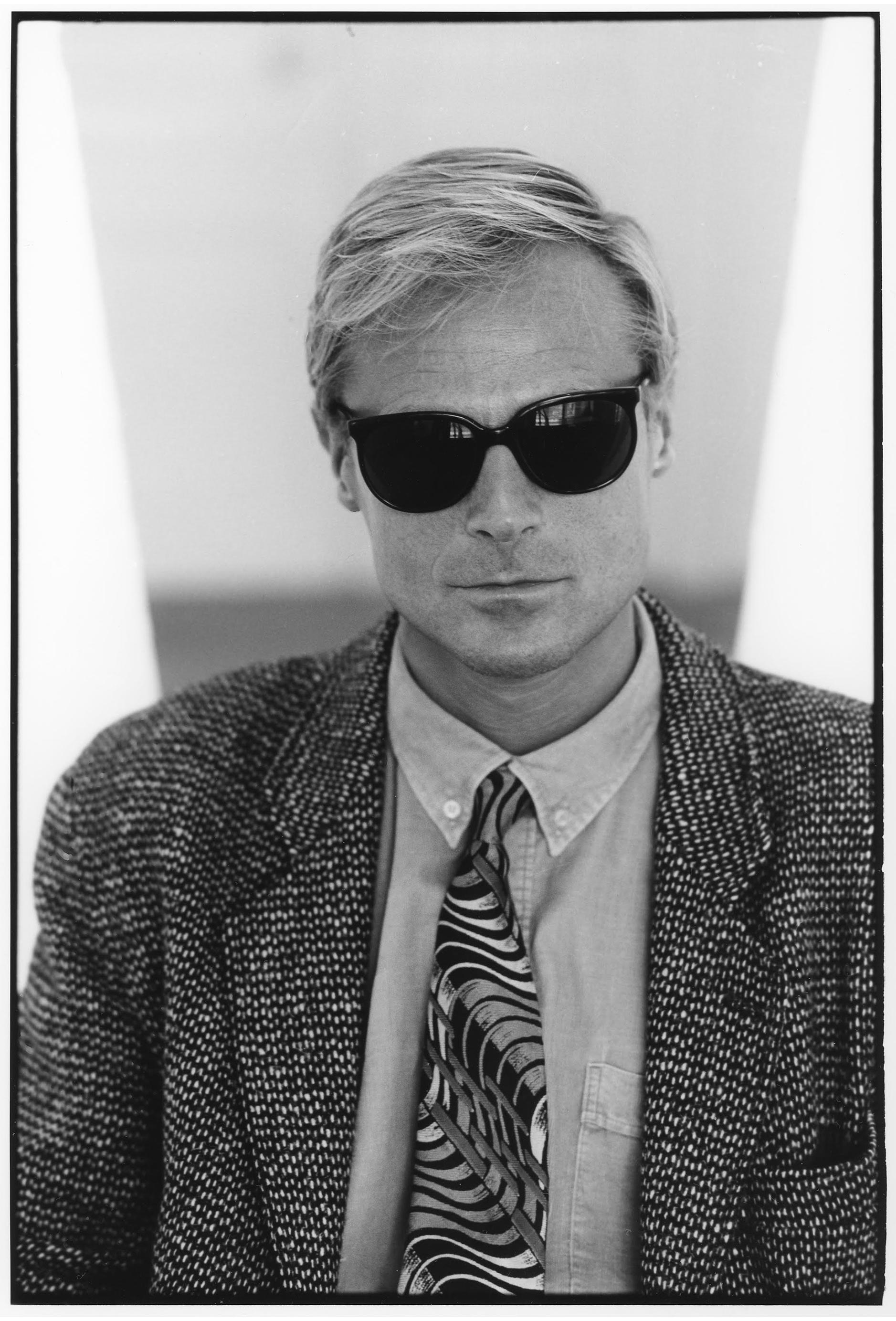
In the early 1980s, the photographer Unglee made an appointment, because that was how one visited, at 26 rue Beaubourg. Ghislain welcomed him in a white tracksuit, as he did for most meetings. From that point on, over nearly fifteen years, photographer and subject produced hundreds of portraits.
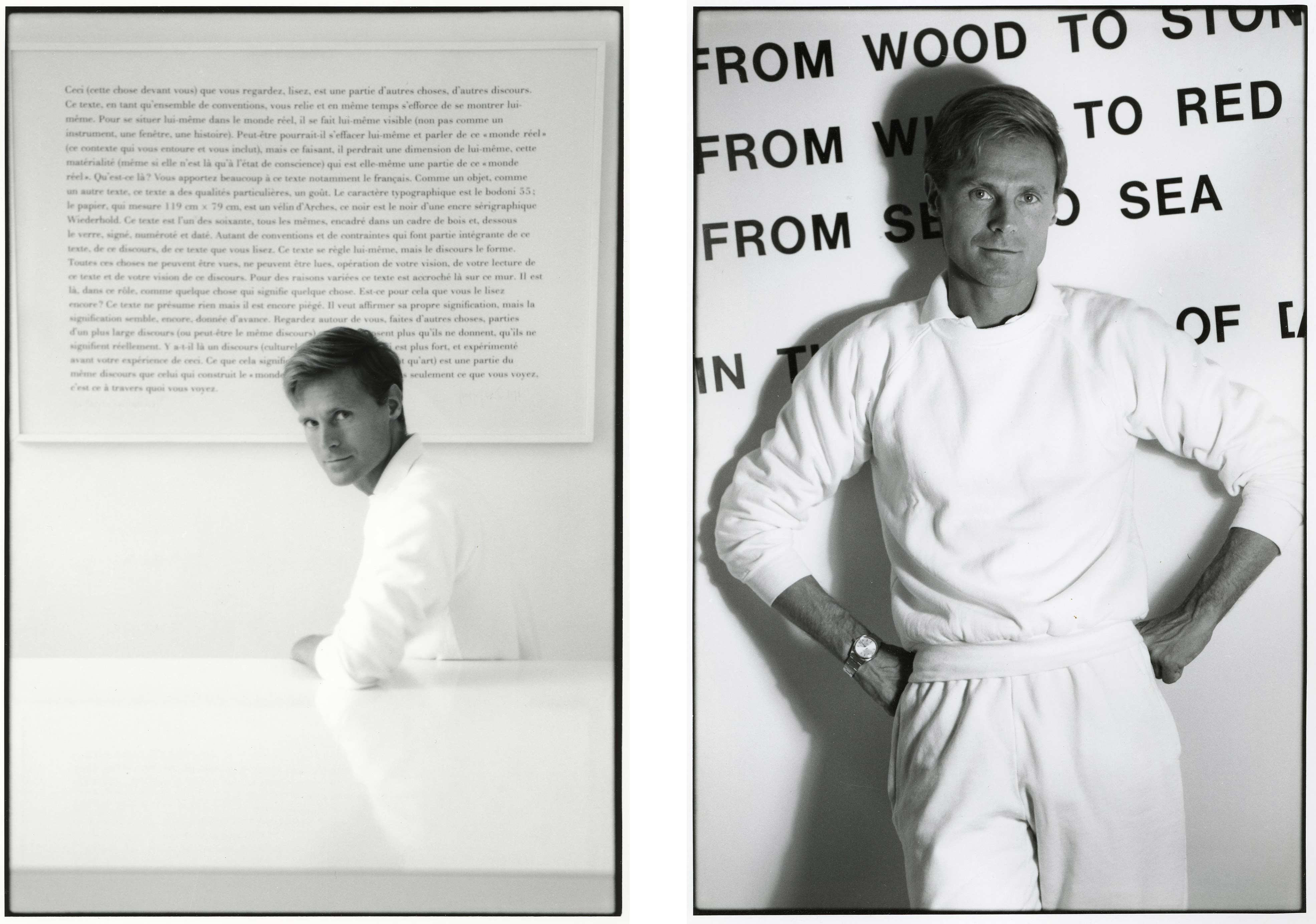
Unglee, Portrait of Ghislain Mollet-Viéville / Laurence Weiner, 1983
Unglee, Portrait of Ghislain Mollet-Viéville (side), 1983
Works by Carl Andre, Donald Judd, Sol LeWitt, Lawrence Weiner, Joseph Kosuth, Art & Language, and Daniel Buren are not backgrounds; they organize the image in the same way they organized the space itself. Ghislain sits on a LeWitt cube, leans toward a Kosuth definition, occupies the visual field of Weiner’s language. The photographs document a life lived inside a system of forms and ideas.
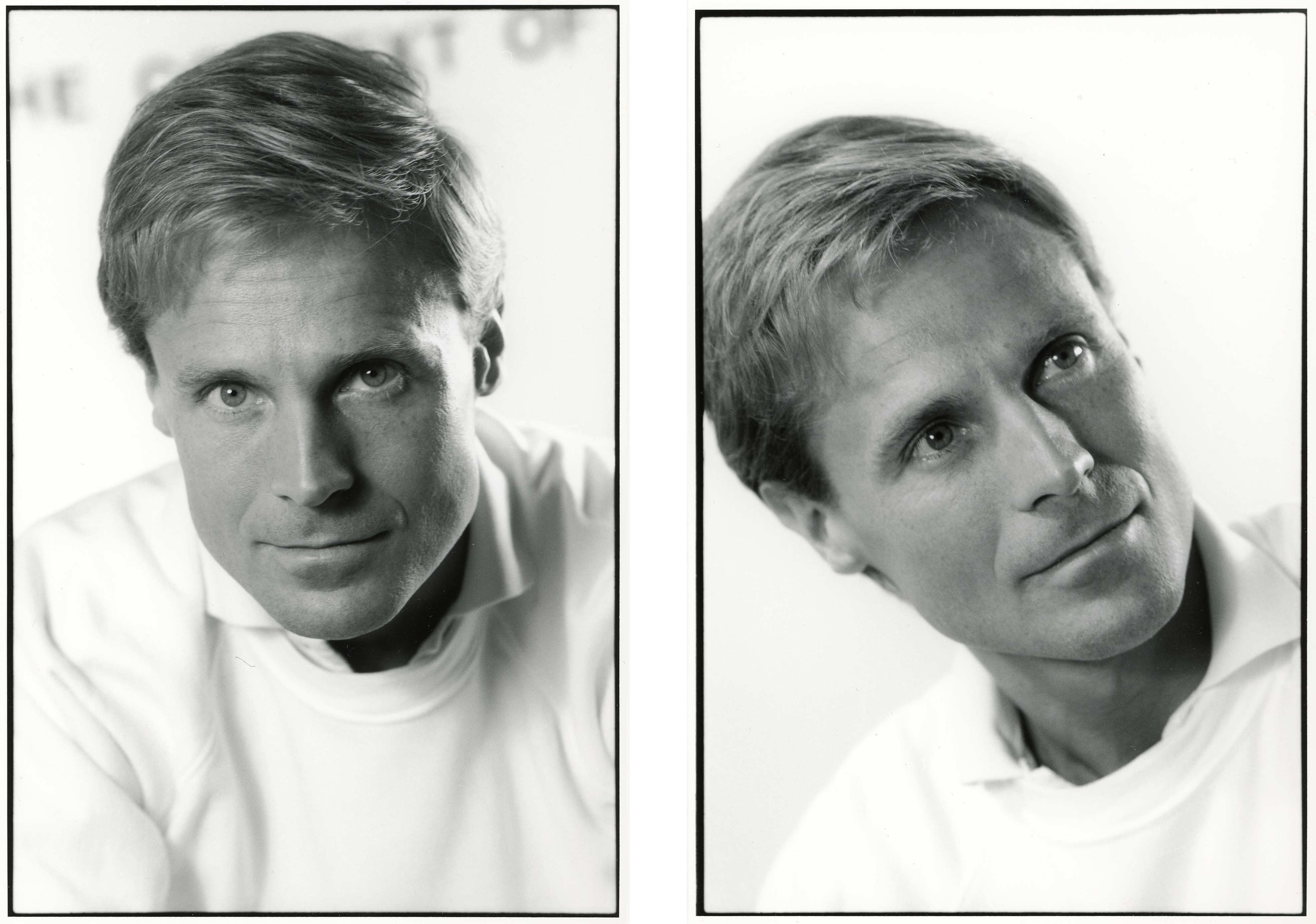
The body is central, and so is its styling. White tracksuits, graphic ties, fitted silhouettes, and the aerobics-driven aesthetics anchor these images. Ghislain chose how he wanted to appear. Control and discipline mattered more to him than excess. His composed queer body, repeated gestures, and careful styling project a deliberate image, sexy, bourgeois, the stance of a well-bred son who understood appearance as a form of seduction.
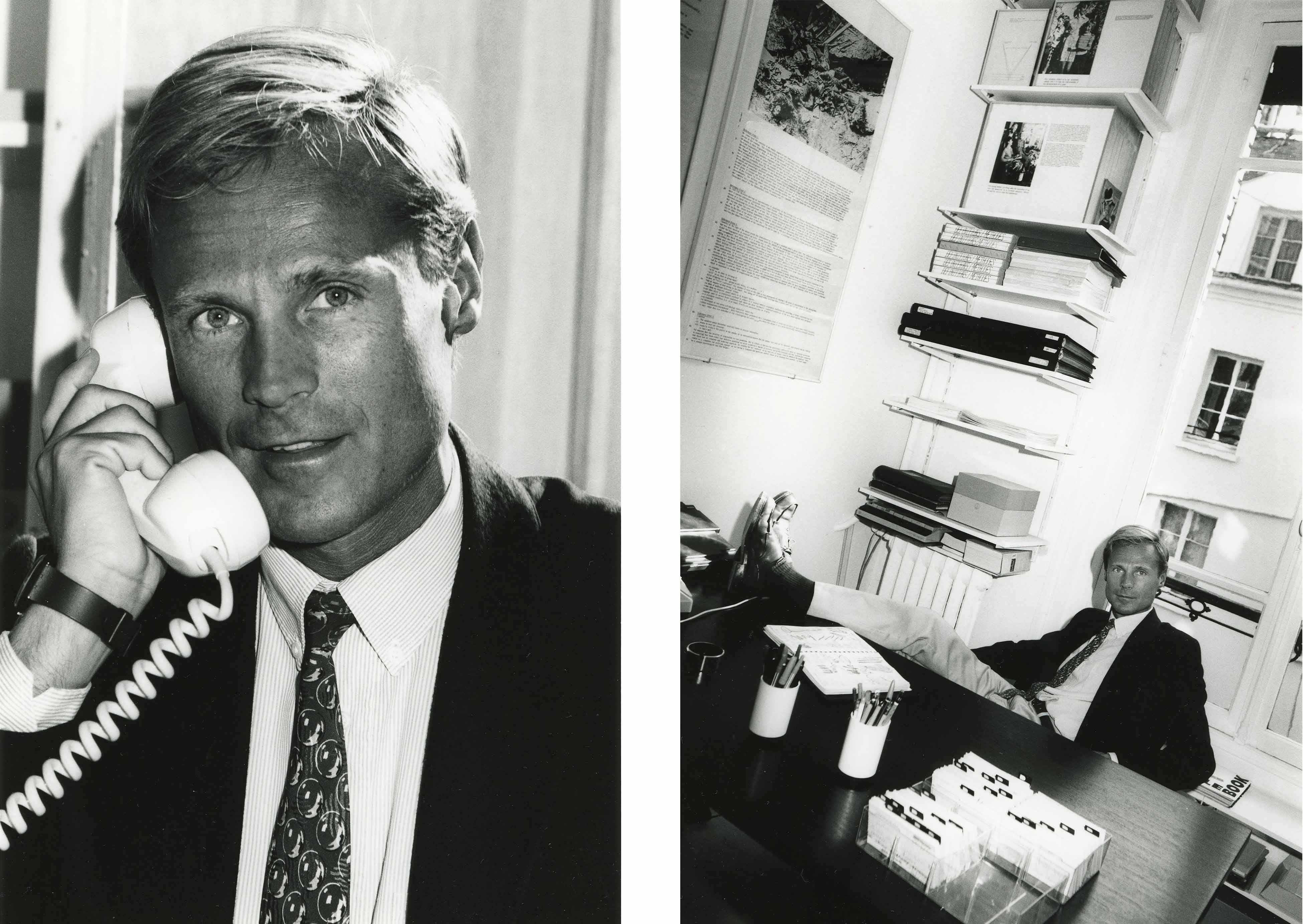
Unglee, Ghislain Mollet-Viéville in his office / Art and Language , 1985

Unglee, Portrait Ghislain Mollet-Viéville / Blinds, 1985
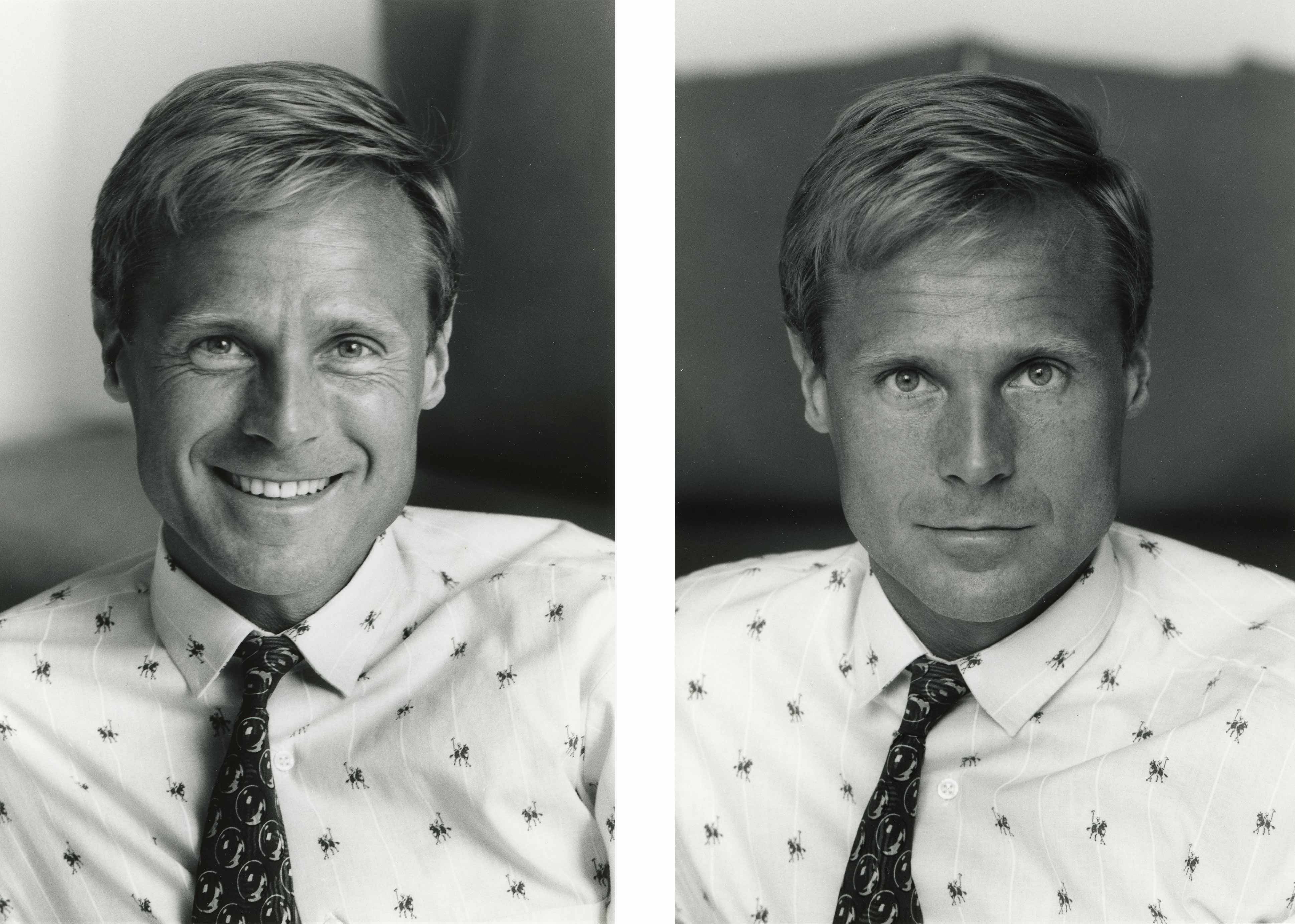
Unglee, Portrait of Ghislain Mollet-Viéville / Polo Shirt , 1985
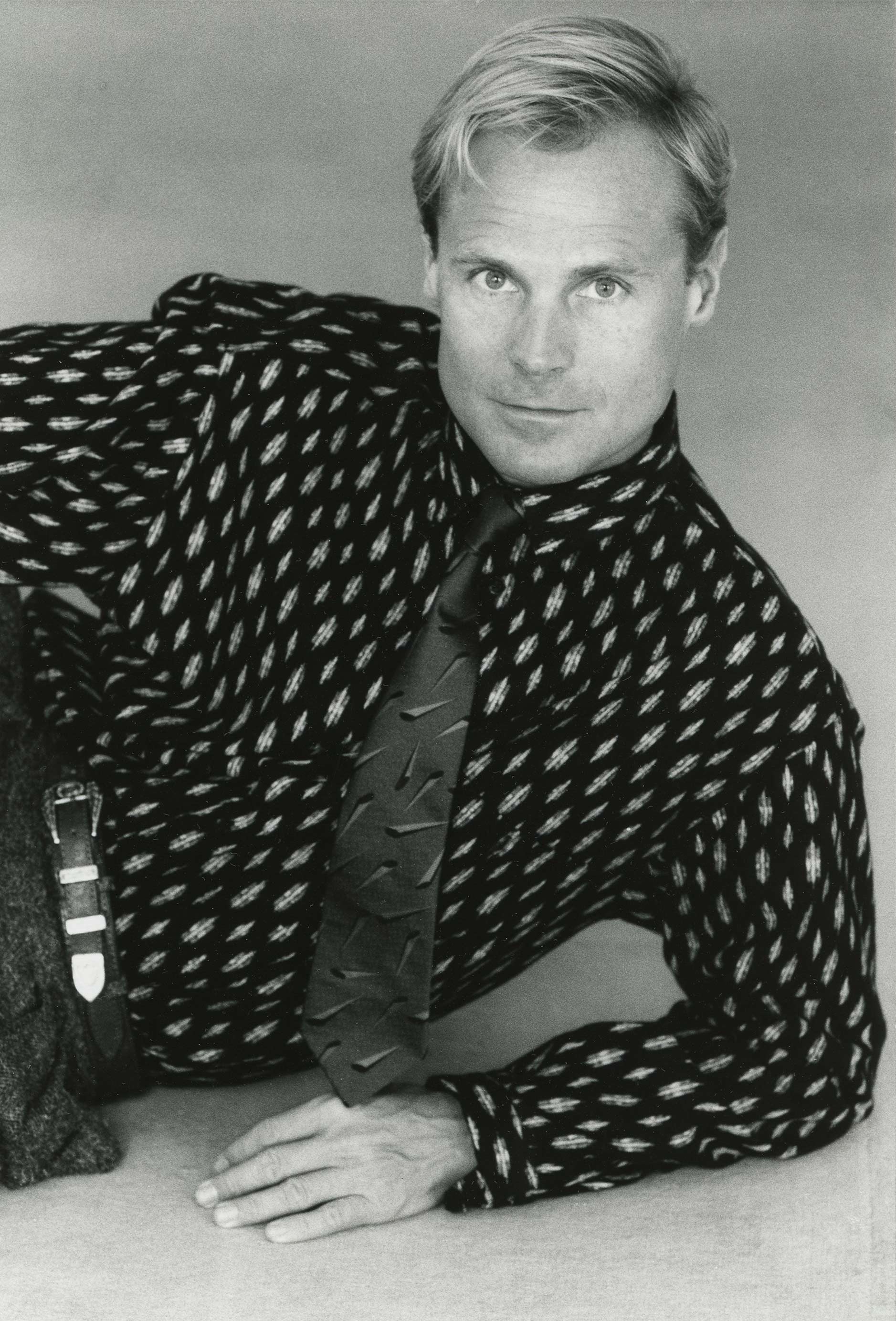
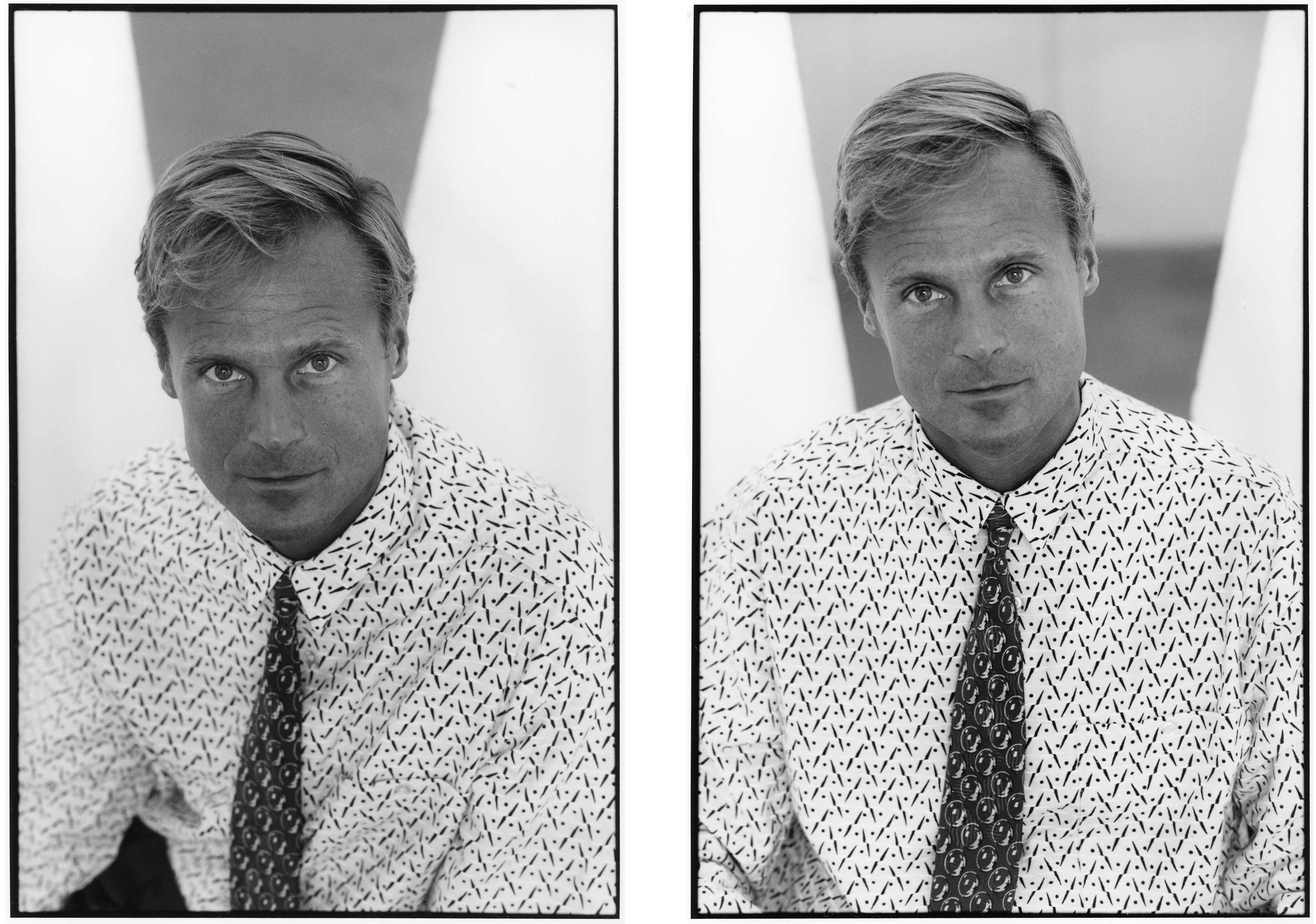
Unglee, Portrait Ghislain Mollet-Viéville / bubble tie 1, 1986
At the time, placing the dealer at the center of the image was highly unusual. These portraits operate as a real performance and actively circulate desire: several were used as advertisements for Mollet-Viéville’s gallery in art magazines, transforming the dealer into both subject and signal.
Today, the apartment has been reconstructed and preserved at the Musée d’art moderne et contemporain (MAMCO) in Geneva under the title L’APPARTEMENT (1994). Now emptied of its inhabitant, it stages the solitude of the collector alone with his works.
I saw Ghislain again recently at Art Basel Paris. He is older, of course, but unmistakably the same, still elegant, still charming. These photographs do not record a moment frozen in the past; they register a position sustained over time, a coherence that remains intact.
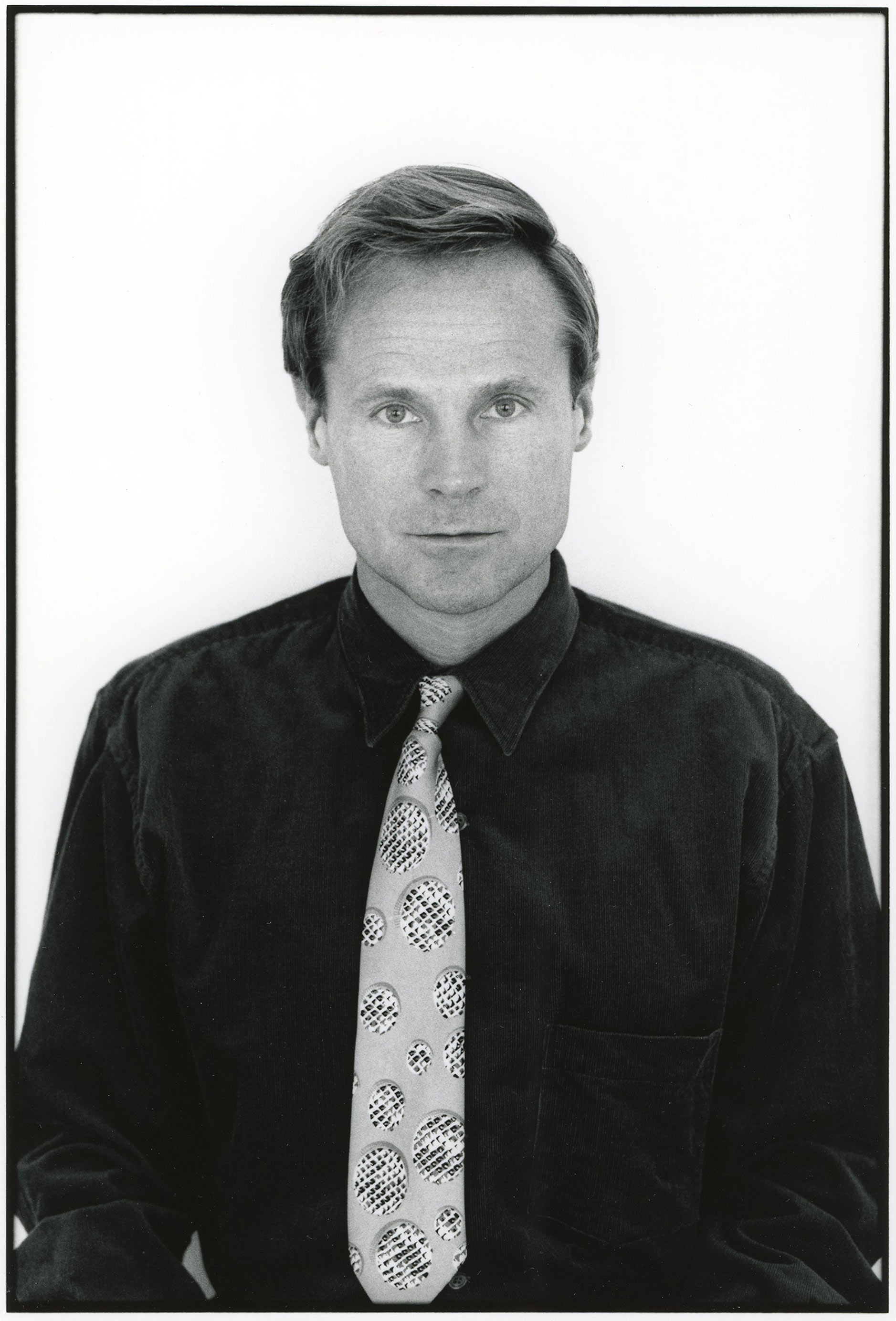

Unglee, Portrait of Ghislain Mollet-Viéville smiling, 1998