

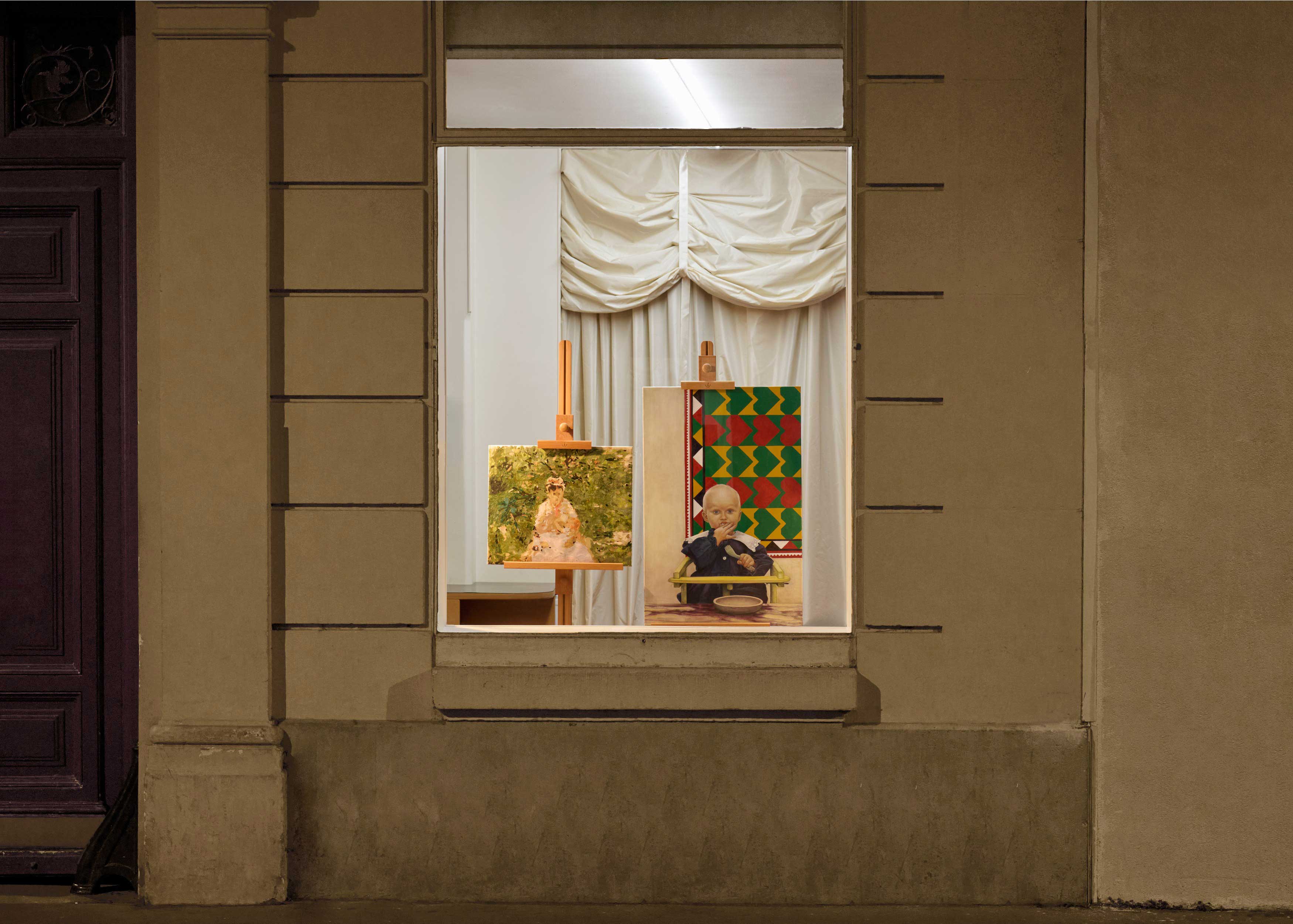
VITA, FUNDER BAKKE, JULY 2024, Lucy McKenzie, 2025, oil on canvas
Curated by Fredi Fischli and Niels Olsen and first shown at Ca’ Buccari, Venice, and more recently at No Tax, Paris, “Pervert or Detective?” departs from the familiar logic of the two-person exhibition commonly built on aesthetic affinities alone, emerging instead from an existing friendship and a sustained, reciprocal inquiry between the two artists. Its foundation lies in an extended conversation with the curator Marie Canet, which structures the accompanying publication. What is revealed is a rare articulation of the porous, often unseen spaces that artistic friendship, particularly between women, can open up: between life and work, informal intimacy and artistic exchange, mutual support and critical dialogue.
Their respective practices initially appear distinct: while Maybury’s is grounded in her position as a political dominatrix mobilising her submissive clients as both a medium and work, McKenzie’s is rooted in her interest in illusion and the motif of trompe-l'œil, which she deploys through a historiography of art and design to expose the disciplinary logic embedded in representation. The exhibition and publication, however, reveal the extent to which the two artists’ positions converge, crystallising around shared concerns with sexuality, gender, power and labor, which function not only as themes but as structuring forces within both of their practices.
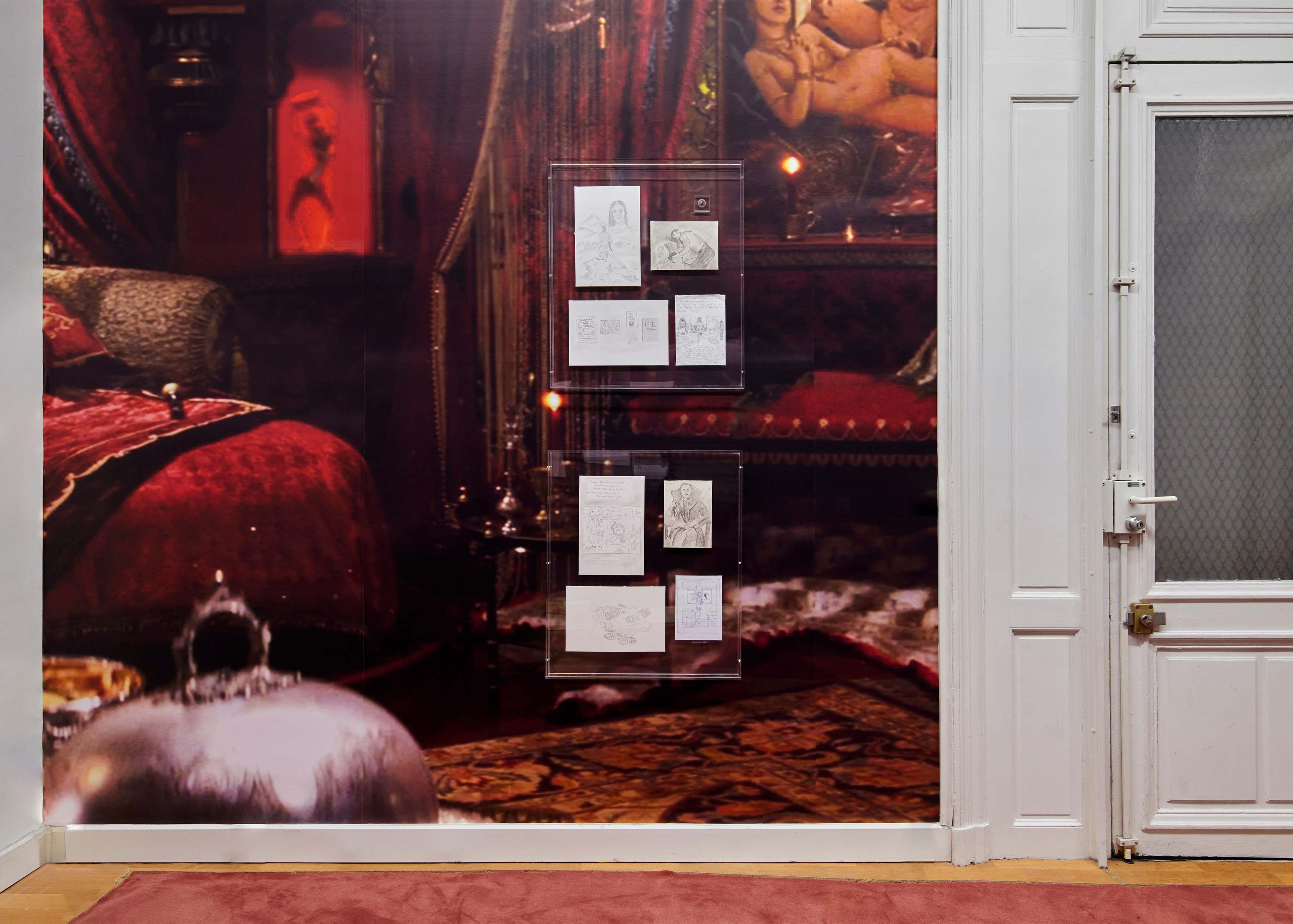
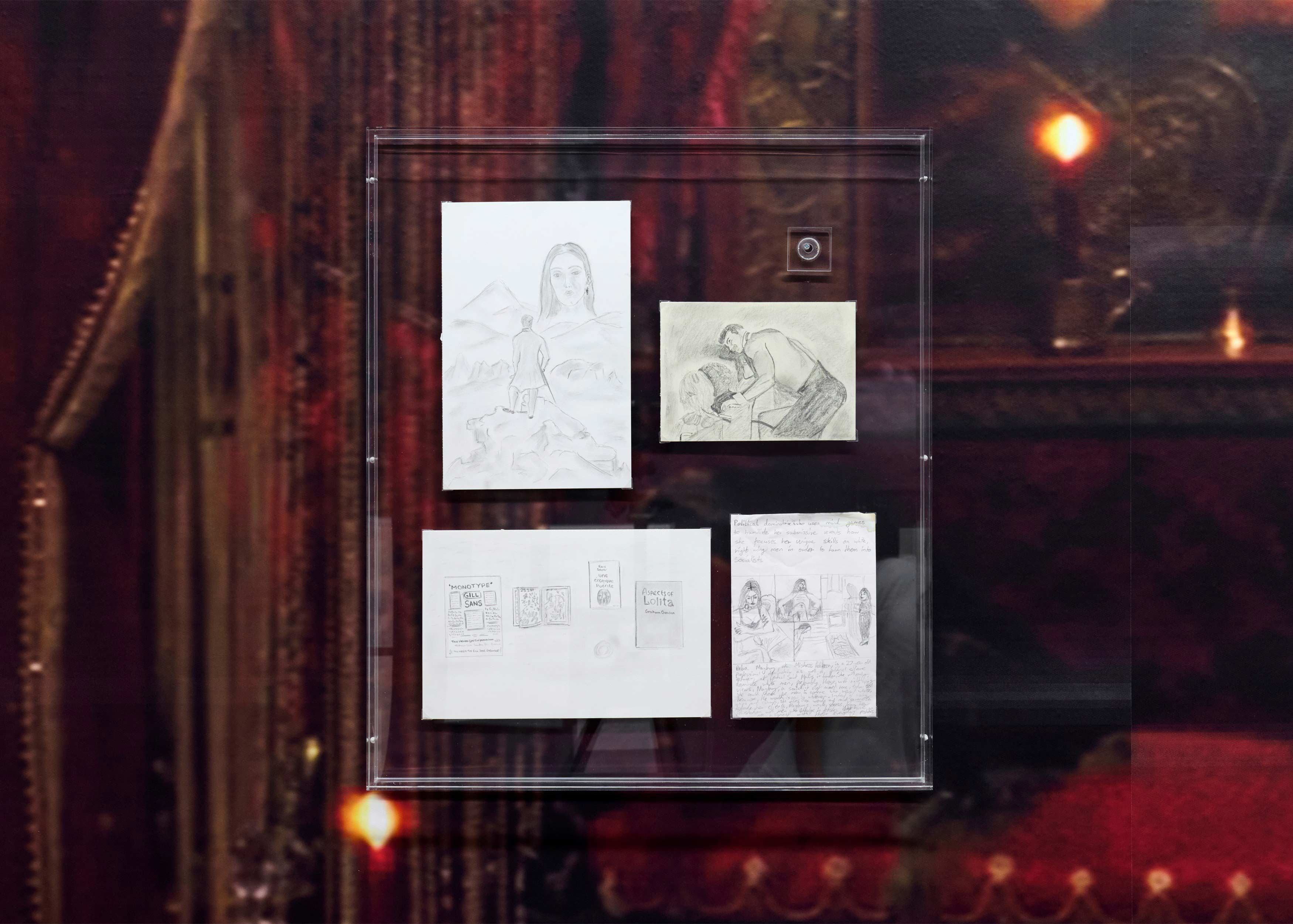
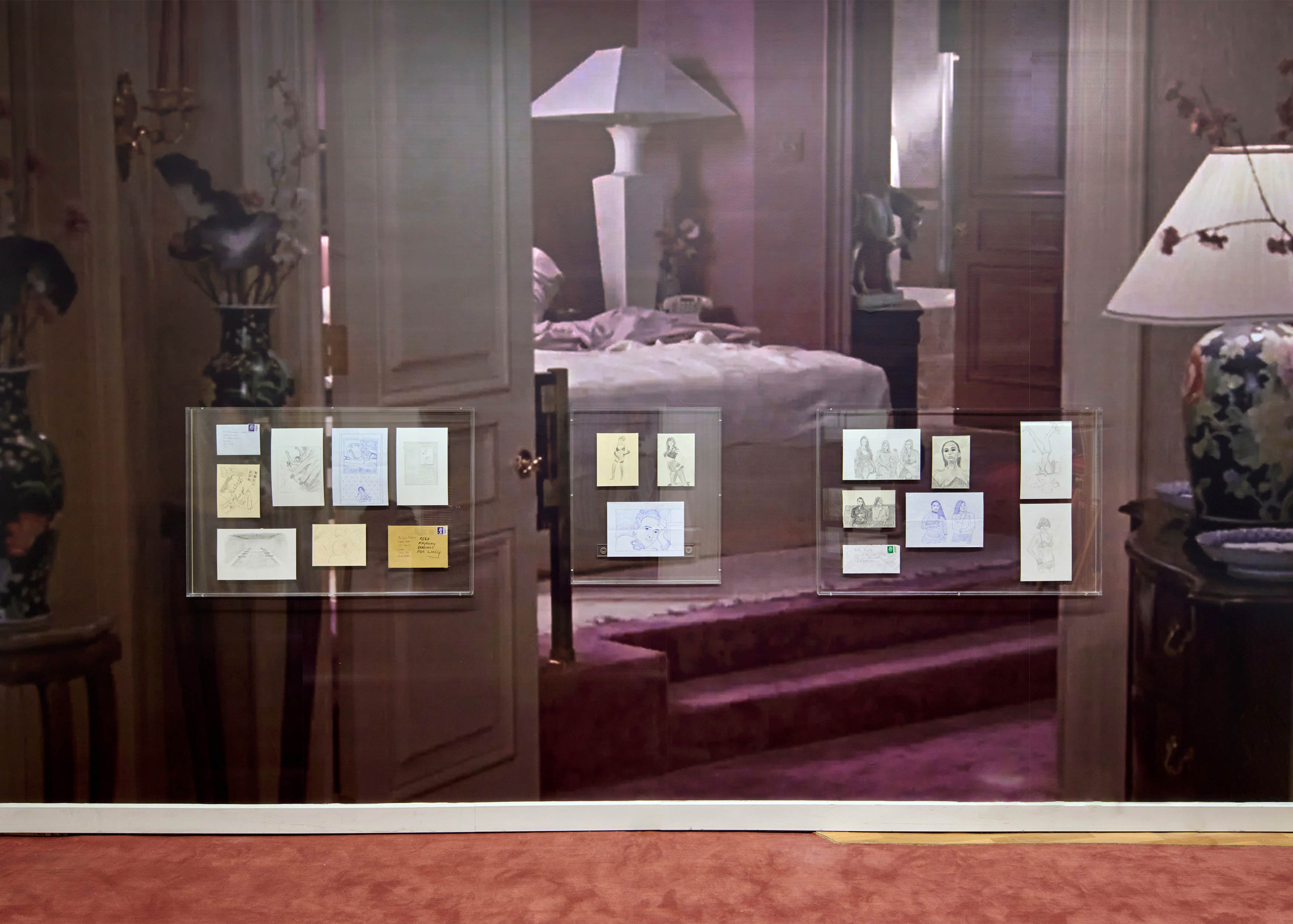
Staged as a theatrical set within No Tax’s space, two facing wallpaper images depict luxuriant interior settings drawn from the films PRETTY WOMAN (1990) and MOULIN ROUGE! (2001), sites in which sex work is foregrounded under the reductive and objectifying Hollywood gaze. Emptied of their characters, the spaces form a hollowed-out setting for a series of Plexiglas cases displaying drawings made by Maybury’s submissives. Originally intended as illustrations for the publication’s conversation, the drawings come to stand in for the films’ vapid constructions, offering instead a visual register through which the book’s thematic chapters, ranging from “sex work” and “pornographic logic” to “#metoo” and “desire,” can be apprehended.
A constellation of images unfolds across the space, where commanding portraits of Maybury and McKenzie are juxtaposed with drawings of Kathy Acker, Cosey Fanni Tutti and Annie Sprinkle, three formative figures for both artists, as well as documentation of their own past work. A crucial point of convergence emerges here in their respective experiences of sex work and pornographic modelling, which serve not merely as biographical incidences but which are foundational to their work.
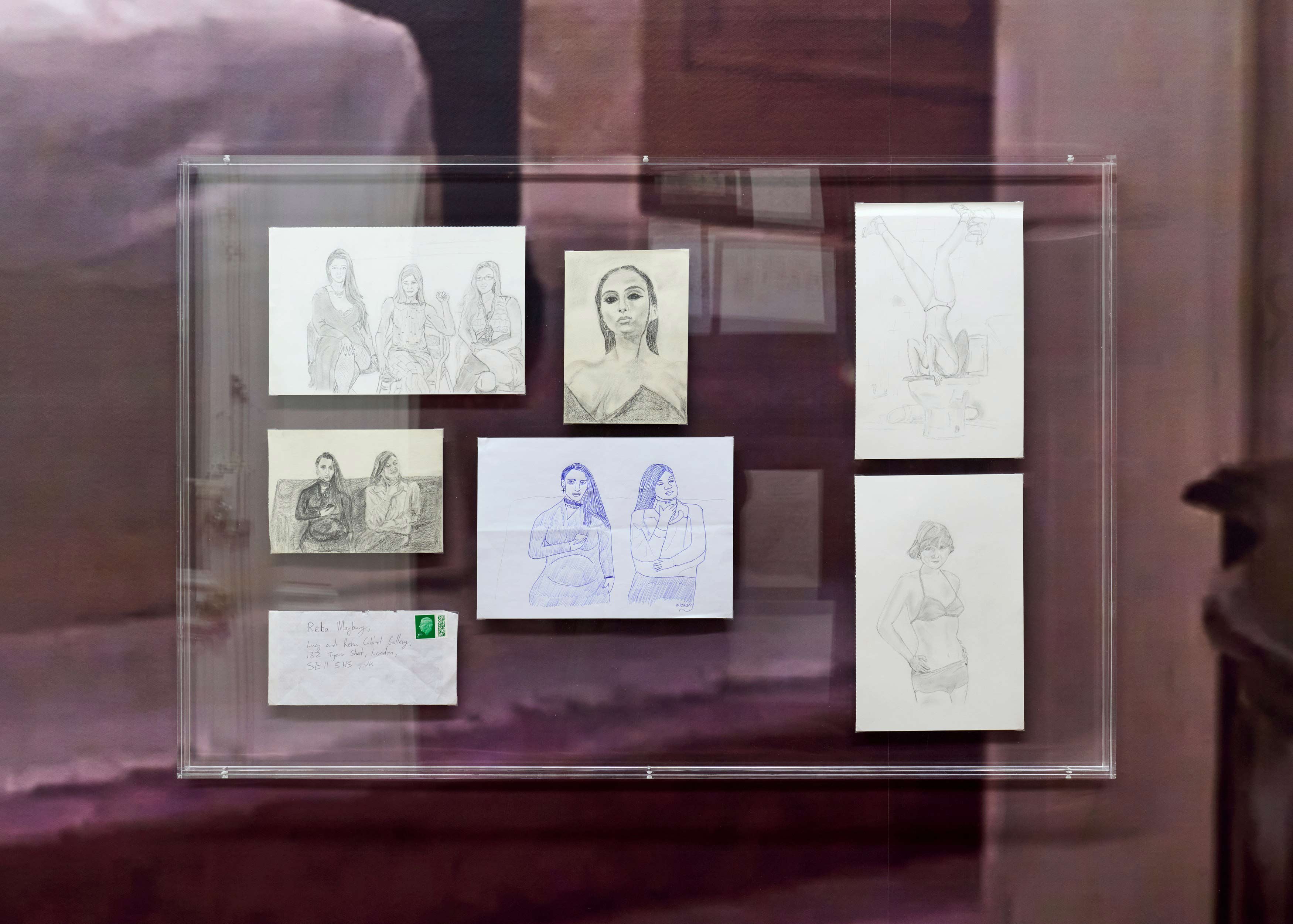
A central motif running through both the exhibition and publication is re-appropriation, used as a methodology by both artists. For Maybury, this takes the form of domination driven by a desire to “know what it means to be a Woman who considers sexuality limitless.”1 By asking her submissives to consent to making work that circulates under her name, gendered dynamics of authorship and authority are destabilised from within. As she states: “I want to use everything as a tool, hence why men are my medium; I want to rebuild the parameters of what we consider pleasure and use men’s pleasure for my own empowerment . . . pleasure is a world of inequality!”2
McKenzie’s position is articulated in parallel terms: “The power of men’s desire is not something we should ignore or repudiate; rather we can instrumentalise [it] for our own satisfaction.”3 This strategy is made explicit through a series of drawings which reproduce pornographic photographs taken of McKenzie by Richard Kern in the mid-1990s. Although conceived, as McKenzie stresses, as a “conscious construction” that she herself “instigated,” the images were later appropriated by male artists who failed to recognise this authorship.4 In response to one such instance at the ICA, London in the context of the 2010 group exhibition “Cosey Complex,” McKenzie transformed her written correspondence with the institution’s curator into a quodlibet trompe-l'œil painting intended as a self-portrait, thus reversing the logic of appropriation back onto herself. In “Pervert or Detective?,” the re-drawing of these photographs by Maybury’s submissives pushes this reversal further still: the pornographic gaze is folded into a process of humiliation, control of male desire.
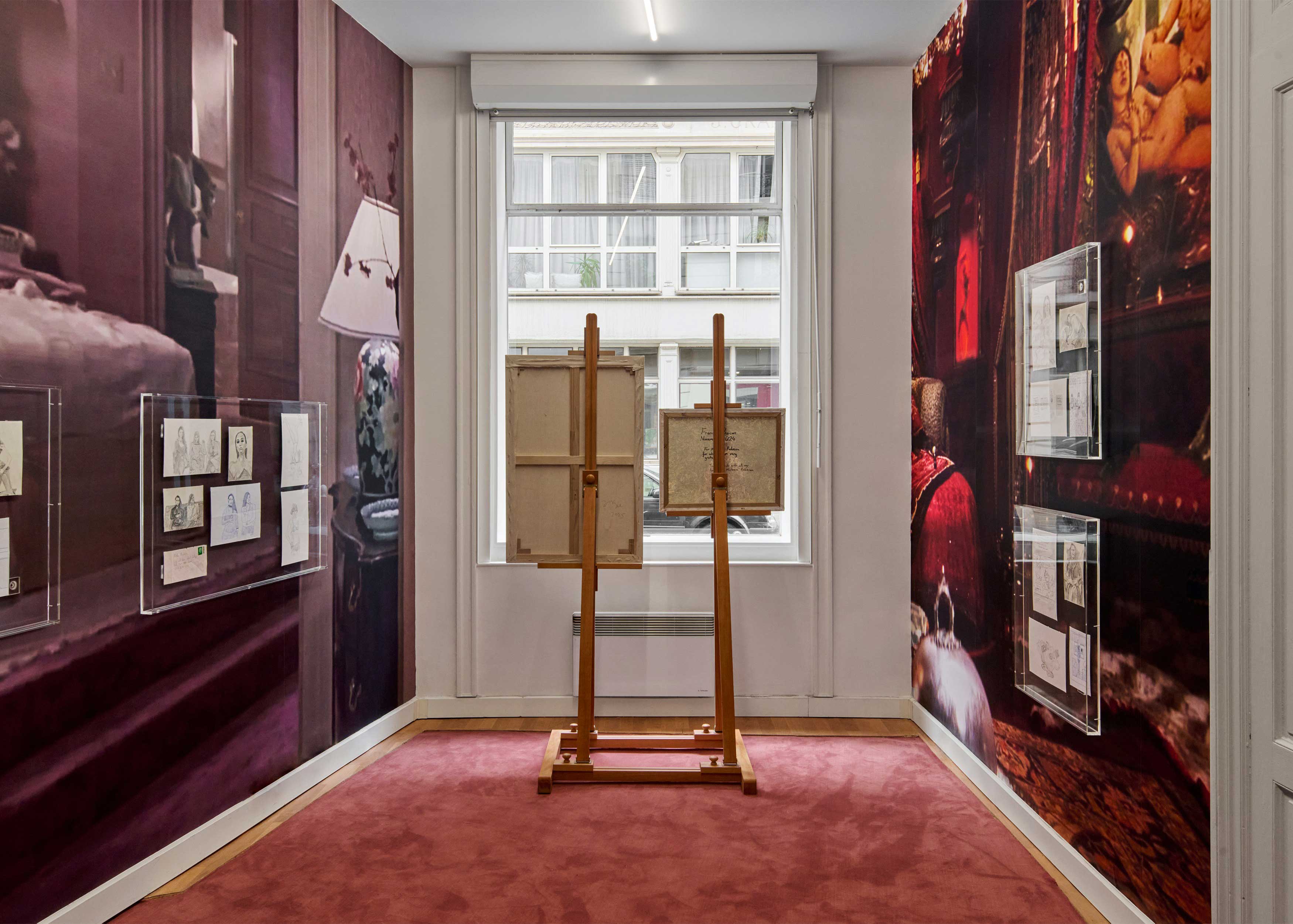
Set apart from the rest of the display are two canvases on easels, their backs to the center. Departing from the rest of the exhibition’s aesthetic register, they each portray a child. One re-presents Berthe Morisot’s THE WET NURSE ANGÈLE FEEDING JULIE MANET (1880), realised here by one of Maybury’s submissives using a paint-by-numbers kit, a device she repeatedly uses as a tool of domination and as a means of critique of the myth of the male genius artist. The image of a child cradled by a wet nurse, painted by an artist renowned for her feminist commitments, stages however a scene of class and gender inequality, foregrounding feminised labor under nineteenth-century capitalism. Presented alongside it is VITA, FUNDER BAKKE, JULY (2024), a painting made by McKenzie of Maybury’s daughter, whose piercing gaze confronts passers-by in a complex collision of images that inspires both tenderness and disconcertment.
Exchanged as gifts between the two artists, the paintings register as gestures of intimacy and reciprocity, which quickly tighten into a commentary on the enduring socio-economic inequalities faced by women and women artists. What emerges is less a question than a visual and textual blueprint for negotiating gender, sexuality, and power— as both artistic methodology and lived experience — insisting on the political necessity of the erotic and the critical as liberatory strategies.
Pervert or Detective? I say both.